

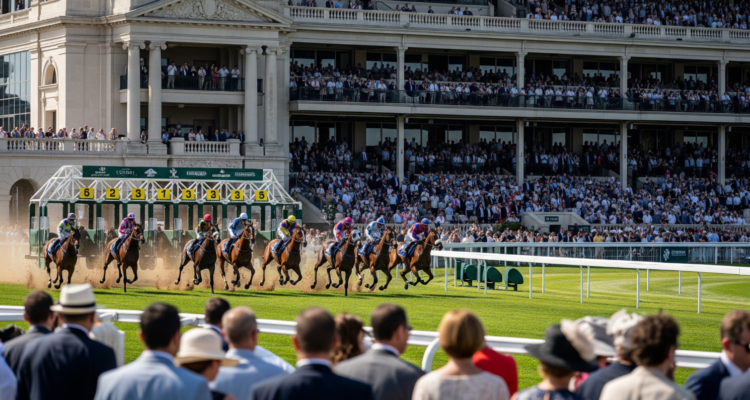
Horse racing has survived because its biggest days feel different from ordinary sport. The best events combine bloodlines, tactics, weather, pace pressure, and old rituals that still hold up under modern scrutiny. Finnish fans who follow data-heavy sports can appreciate the same logic here: form cycles, distance suitability, trainer intent, ground condition, and market movement all matter before the gates open.
For bettors, racing is not just about picking the fastest horse. Serious analysis starts with race class, draw bias, pace maps, jockey booking, recent sectional times, and how odds react when late money enters the market. A disciplined fan looking at horse racing betting should treat every race as a probability puzzle rather than a hunch. Bankroll control matters because variance is sharp in fields with 12, 16, or 20 runners. The smartest approach is modest staking, record-keeping, and avoiding emotional bets on famous names.
The Kentucky Derby Still Has the Loudest Two Minutes
The Kentucky Derby first ran in 1875 at Churchill Downs, and its reputation rests on more than spectacle. It is the opening leg of the American Triple Crown and a brutal test for three-year-old thoroughbreds still learning how to handle pressure. The 1¼-mile distance forces speed horses to conserve energy and closers to avoid traffic.
Its prestige comes from timing. A Derby winner becomes a story before becoming a finished racehorse. Trainers must balance prep-race form with freshness, while bettors weigh post position, early pace, and whether a horse can handle the noise of Louisville.
Royal Ascot Turns Racing Into Theater
Royal Ascot traces its origin to Queen Anne in 1711, and few racing meetings carry the same blend of sport and ceremony. The five-day meeting is not a single race but a concentration of elite flat racing, with Group-level contests over sprint, mile, and staying distances.
For analysts, Ascot is fascinating because the straight course exposes horses. There is nowhere to hide behind tight turns. Draw bias, weather, and ground changes can reshape an entire betting market before the first race of the day.
Breeders’ Cup Rewards Versatility
The Breeders’ Cup works differently from old single-race monuments. It is a championship weekend built around divisions: Classic, Turf, Mile, Sprint, Juvenile, Filly & Mare events, and more. The official Breeders’ Cup material lists $34 million in purses and awards across the weekend, which explains why global connections ship horses there.
The tactical difficulty is range. Dirt specialists, turf horses, sprinters, juveniles, American speed, European stamina, and Japanese depth can all collide. That makes pre-race study harder but richer.
Dubai World Cup Shows Racing’s Global Money Shift
The Dubai World Cup became a modern prestige marker because it moved elite racing eastward. Meydan’s dirt surface and the event’s major prize pool attract horses from the United States, Japan, Europe, and the Gulf.
It also changed how fans read international form. A horse that looks dominant at home may face travel stress, surface questions, and a different pace shape abroad. That is where global racing analysis becomes more than a list of wins.
Melbourne Cup Belongs to the Stayers
The Melbourne Cup first ran in 1861 and became Australia’s great racing ritual. Its two-mile distance makes it a stamina race, not a pure speed contest. Weight, trip suitability, and a horse’s ability to relax are decisive.
European stayers have shaped the modern Cup, but local preparation still matters. Horses need the engine to stay, the mind to settle, and the agility to survive a crowded handicap.
Prix de l’Arc de Triomphe Tests Class on Turf
The Prix de l’Arc de Triomphe is Europe’s great autumn examination for middle-distance turf horses. Run at Longchamp over 2,400 meters, it often brings together classic winners, older champions, fillies, colts, and international challengers.
The Arc is rarely simple. Soft ground can blunt speed, draw position can punish slow starters, and tactical patience matters as much as raw ability. It is a race where class meets chaos.
What Sharp Fans Track Before Big Race Days
A useful reading checklist is simple but strict:
- Recent form against comparable class
- Proven distance ability
- Ground or surface preference
- Draw and likely running style
- Trainer form over the past month
- Jockey change or repeat booking
- Market movement close to post time
| Event | Country | Core Prestige Factor | Key Analytical Angle |
|---|---|---|---|
| Kentucky Derby | USA | Triple Crown opener | Pace, draw, stamina |
| Royal Ascot | UK | Royal meeting and elite flat races | Ground, draw, class |
| Breeders’ Cup | USA | Championship divisions | Surface switches, travel |
| Dubai World Cup | UAE | Global prize power | Dirt form, international travel |
| Melbourne Cup | Australia | Two-mile handicap tradition | Weight, stamina, settling |
| Prix de l’Arc de Triomphe | France | Turf middle-distance crown | Ground, draw, late pace |